
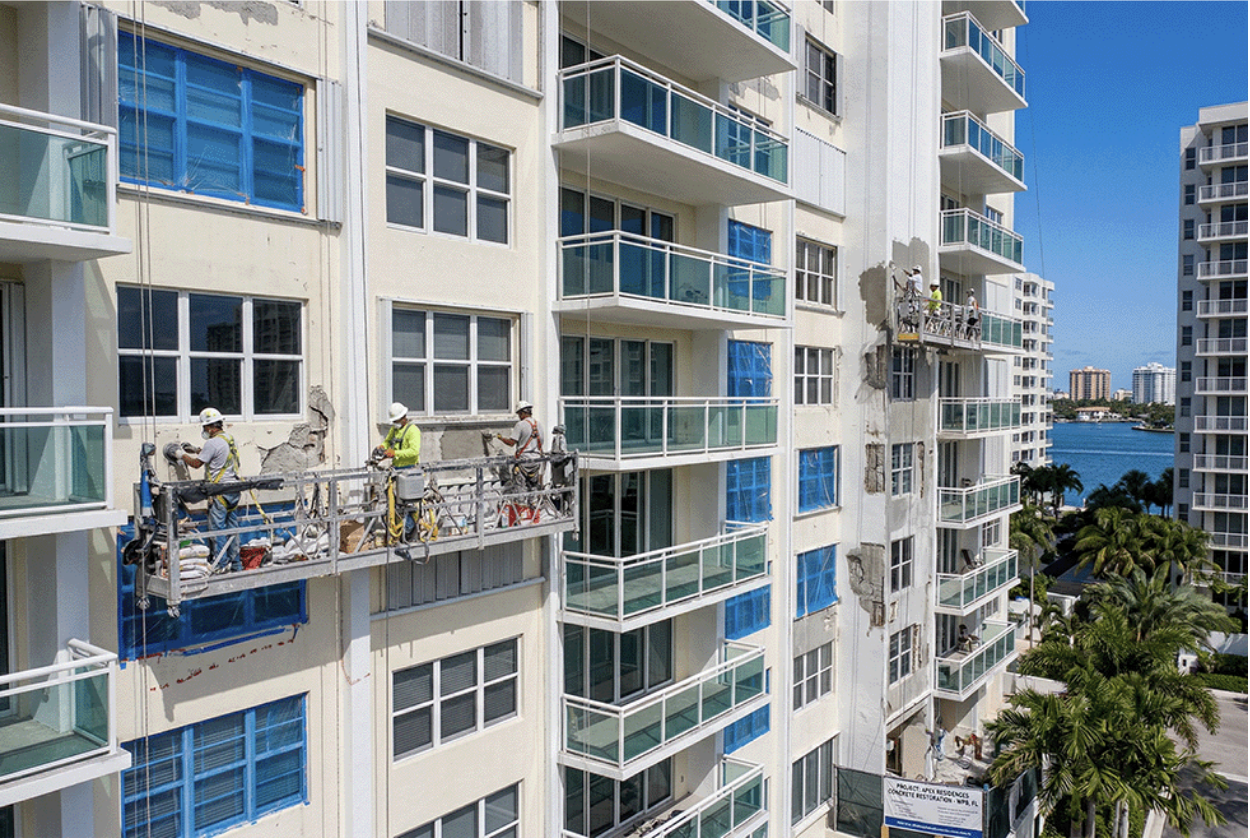
Florida’s new condo laws, primarily stemming from SB 4-D (2022) and subsequent updates, require condominium associations to complete milestone inspections and fully fund structural repairs, including concrete restoration, without delay. Associations can no longer waive reserves for structural components, and failure to act may expose boards to legal liability, financial penalties, and increased risk to residents.
A New Legal Landscape for Condo Associations in Florida
As a Construction Attorney in West Palm Beach, we are advising more condominium and HOA boards than ever before on compliance with Florida’s updated building safety laws. These changes were enacted following the Surfside Condominium Collapse and have significantly reshaped how associations must approach concrete restoration and structural maintenance.
 If your condo building is located along the coast, on A1A / the Intracoastal from West Palm Beach to Palm Beach Gardens, or in high-density areas like Singer Island, these requirements are not optional. They are now central to your legal and financial responsibilities as a board.
Along Palm Beach’s South Ocean Boulevard corridor, associations at communities such as Ocean Towers, The Halcyon, The Enclave, and The Meridian are part of the broader conversation around aging structures, inspections, and reserve funding.
I’m Jason Maier of Maier Law in West Palm Beach, and I am board-certified in construction law. In this blog, I’ll walk you through the condo repair, compliance, and liability issues boards and associations need to understand.
What the New Laws Actually Require
At a high level, the updated statutes require:
- Milestone Inspections
Buildings of a certain age must undergo formal structural inspections to identify deterioration, including concrete damage. - Structural Integrity Reserve Studies (SIRS)
Associations must now fully fund reserves for critical components such as:- Concrete structures
- Load-bearing walls
- Waterproofing systems
- No More Waiving Reserves
Previously, associations could vote to waive or reduce reserves. That is no longer permitted for structural items. - Prompt Action on Repairs
If concrete deterioration is identified, boards must take timely action…delays can create exposure.
For additional reference, the Florida Legislature provides statutory guidance under §553.899 and §718.
The compliance burden is already widespread. According to the Florida Department of Business and Professional Regulation (DBPR), 7,836 condominium associations had reported completion of a Structural Integrity Reserve Study as of November 30, 2025.
Why Concrete Restoration Is Now a Legal Priority
Concrete restoration is no longer just a maintenance issue -it is a compliance issue.
We are seeing a shift where engineering reports identifying spalling, cracking, or corrosion now trigger:
- Mandatory budgeting decisions
- Special assessments
- Legal review of contractor agreements
- Potential disputes between owners and associations
“Concrete restoration used to be something boards could defer. Today, deferring it can expose the association, and sometimes the board members themselves, to serious legal consequences.”
– Jason Maier, construction law attorney in West Palm Beach
In Palm Beach County, particularly in oceanfront communities, saltwater intrusion accelerates concrete deterioration. Buildings along A1A and barrier island communities are especially impacted.

Legal Risks for Condo Boards
Boards must understand that these laws carry real consequences.
Failure to comply may lead to:
- Breach of fiduciary duty claims
- Insurance complications or denial of coverage
- Increased exposure to litigation from unit owners
- Emergency repairs at a significantly higher cost
“From a construction law standpoint, the biggest mistake I see is waiting too long. Once structural issues are identified, the legal obligation to act becomes very clear,” says Jason.
We have also seen increased litigation trends throughout South Florida, including disputes involving delayed maintenance and special assessments in coastal communities similar to those in Palm Beach and Broward Counties.
What Condo Associations Should Do Now
If you are on a condo board in West Palm Beach or Palm Beach Gardens, we recommend:
- Review your most recent engineering reports immediately
- Confirm compliance with milestone inspection deadlines
- Evaluate reserve funding in light of SIRS requirements
- Consult legal counsel before entering into restoration contracts
- Communicate clearly with unit owners regarding financial obligations
As a business law firm with a focus on construction law and litigation, we routinely assist boards in navigating these issues from contract review to dispute resolution.
Local Insight: Palm Beach County Considerations
In areas such as Palm Beach, Singer Island, and along the Intracoastal, we are seeing:
- Increased engineering scrutiny
- Rising costs for restoration projects
- Greater pressure from insurers and lenders
The courthouse in downtown West Palm Beach has also seen a steady flow of disputes tied to construction defects and association governance, underscoring the importance of proactive legal guidance.
We also advise associations in established West Palm Beach condo communities such as The Plaza of the Palm Beaches, City Palms, Esplanade Grande, and Montecito Palm Beach, where boards still need to review contracts, reserve obligations, and repair timing carefully.
Reduce Risk and Stay Compliant
Florida’s new condo laws have fundamentally changed how associations must approach concrete restoration. What was once a discretionary expense is now a legal obligation tied directly to safety and compliance.
Working with a knowledgeable Business Attorney in West Palm Beach can help your association reduce risk, stay compliant, and make informed decisions in an increasingly complex regulatory environment.
Contact Maier Law for a free, confidential consultation. We’ll review your case and help you understand your options. Simply click here, call us today at (561) 318-6589, or visit us at 500 S Australian Ave, Suite 500, West Palm Beach, FL.
Frequently Asked Questions (FAQ)
Do all condo buildings in Florida need milestone inspections?
Not all, but many do—particularly those over a certain age and height. The requirements depend on location and building specifics.
Can a condo association delay concrete restoration to save money?
No. If structural issues are identified, delaying repairs may violate Florida law and expose the board to liability.
Are condo owners responsible for paying for concrete restoration?
Typically, yes, through assessments. However, responsibility depends on governing documents and the nature of the repairs.
What happens if reserves are not properly funded?
Associations may face legal and financial consequences, including the inability to meet statutory requirements and increased exposure to claims.
About Jason C. Maier, Esq.
Jason C. Maier is Managing Partner at Maier Law, P.A. He has 25 years of trial and arbitration experience and can represent clients nationwide in financial fraud and negligence cases. His record includes success in complex financial disputes before both judges and arbitration panels. Jason has earned recognition for his focus on investor recovery and client advocacy.